How CALS Education supports Rural Hospitals & Emergency Departments with OB and Neonatal Training

May 11, 2025

|

An RN took a CALS Course and helped deliver a baby less than a week later. CALS Education gave the RN and her team the confidence and information they needed to deliver a baby in their Emergency Department. We are excited to share her story for Mother’s Day!

If you are looking for OB and Neonatal Education, CALS is offering another OB & Neonate Module on Thursday, July 24th, in Plymouth, MN. You can learn more about this course and register at calsprogram.org/calendar

👩‍🍼CALS OB/NEONATE MODULE

7/24/25

‍1:00-5:00 PM

Plymouth, MN

How CALS Education supports Rural Hospitals and Emergency Departments with OB and Neonatal Training.
Pictured: graphic of a mother holding a baby.
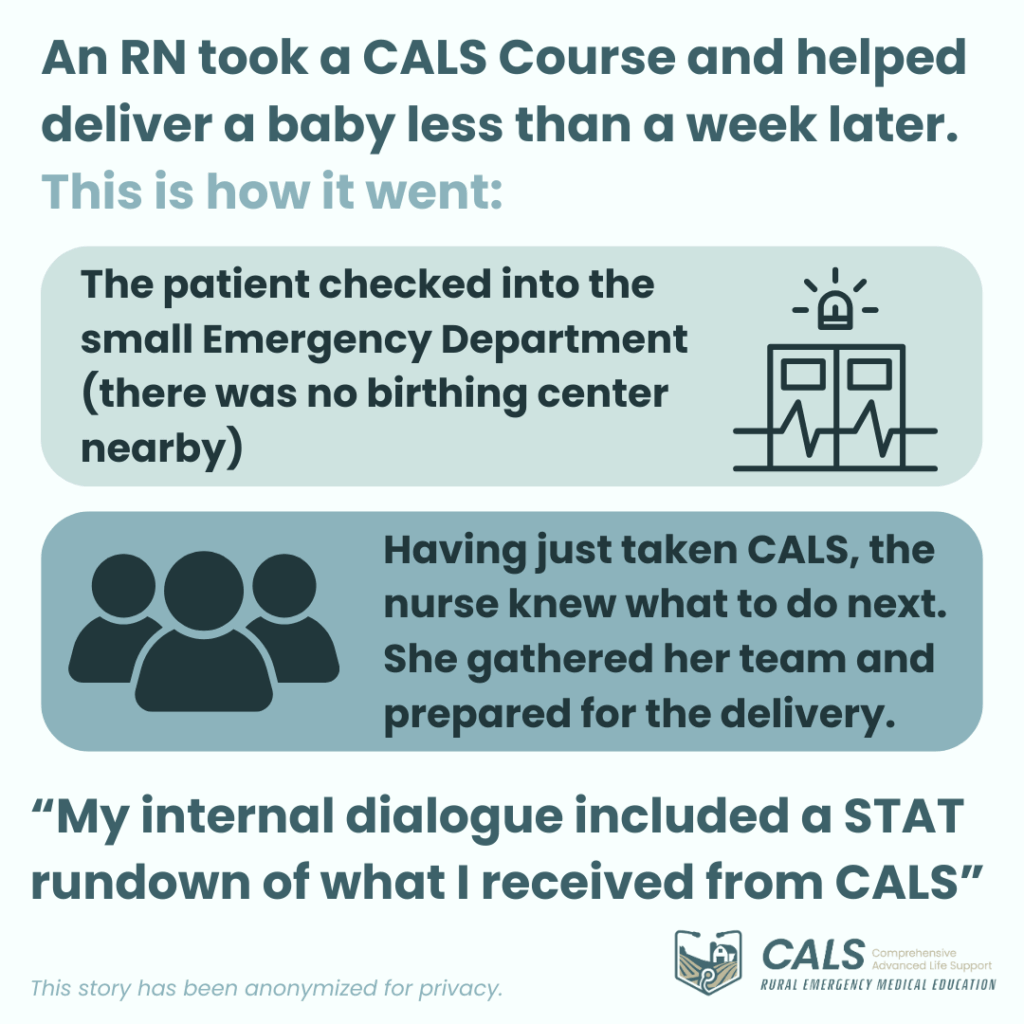
An RN took a CALS Course and helped deliver a baby less than a week later. This is how it went:
The patient checked into the small Emergency Department (there was no birthing center nearby). 
Having just taken CALS, the nurse knew what to do next. She gathered her team and prepared for the delivery. 
"My internal dialogue included a STAT rundown of what I received from CALS"
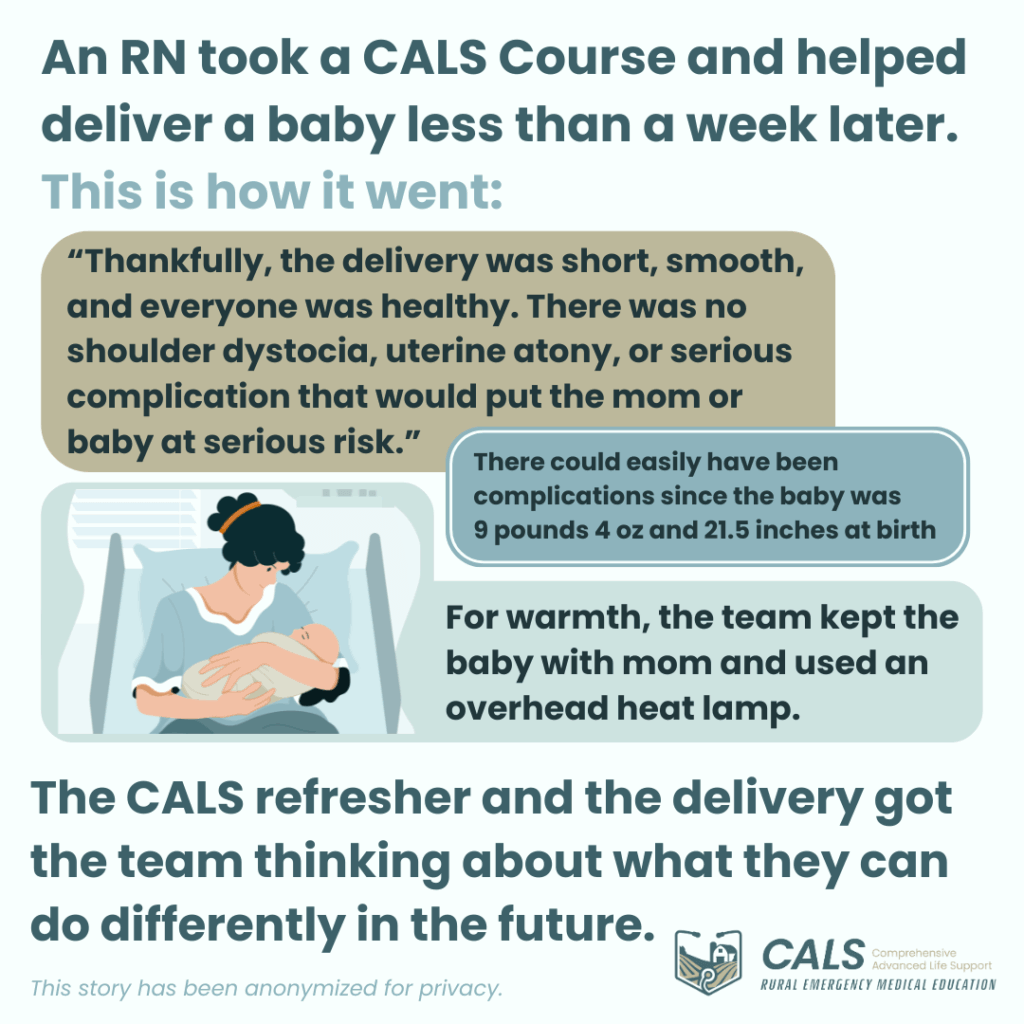
"Thankfully, the delivery was short, smooth, and everyone was healthy. There was no shoulder dystocia, uterine atony, or serious complication that would put the mom or baby at serious risk."
There could easily have been complications since the baby was 9 pounds 4 ounces and 21.5 inches at birth. 
For warmth, the team kept the baby with mom and used an overhead heat lamp. 
The CALS refresher and the delivery got the team thinking about what they can do differently in the future.
"We were running around after the delivery trying to find items, especially for the baby."
Outcome: They know what to add to their hospital's equipment and protocols for future instances.
1. Create a newborn delivery kit with diapers, caps, and neonatal-sized resuscitation equipment. 
2. Have protocols in place for unexpected and complicated deliveries. 
3. Add an 'OB Override' option in their medication dispensing system.
Designed for under-resourced and rural healthcare facilities, the CALS Trauma & Provider course:
Describes how to assist with imminent deliveries and OB emergencies (such as shoulder dystocia, abruption, PPH, ectopic pregnancy, and more). 
It demonstrates life-saving skills for both pregnant and neonatal patients. 
The CALS OB/Neonate Module expands upon the OB and Neonatal skills covered in the Trauma & Provider Course and provides a 4-hour interactive opportunity to hone critical life-saving skills.